Held in Reserve: The Hidden Cost of Premium Paper You Never Permit Yourself to Use
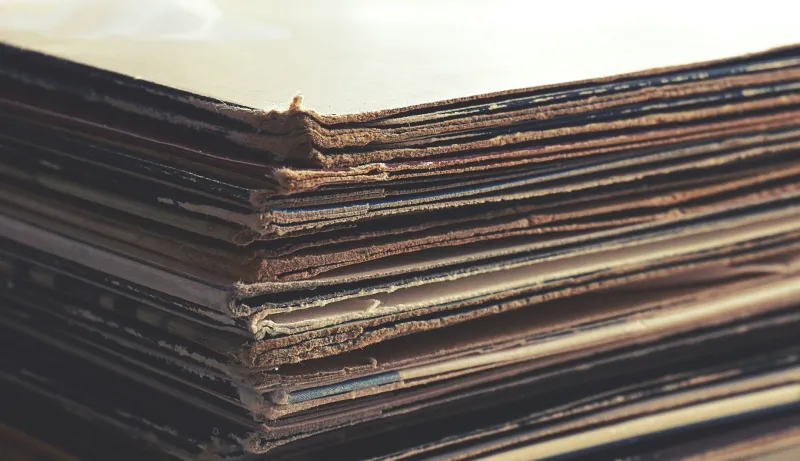
Somewhere in your studio, your home office, or the bottom drawer of a filing cabinet, there is a stack of paper you have not touched in months—possibly years. You remember acquiring it. Perhaps it was a single sheet of handmade cotton rag from a small Vermont mill, or a dozen leaves of cold-pressed watercolor stock you ordered after seeing a printmaker's work that stopped you cold. You brought it home, set it down carefully, and told yourself you were saving it for something worthy.
That moment of intention was real. So was the one after it, when you reached for a cheaper pad instead.
This pattern is more common among serious creatives than most people admit, and it carries a cost that has nothing to do with the price printed on the receipt.
Why We Stop Ourselves Before We Start
The psychology behind unused premium paper is layered and, in some ways, counterintuitive. The very qualities that make a sheet worth purchasing—its texture, its weight, its evident craftsmanship—can transform it into something too significant to risk. Psychologists who study perfectionism describe a phenomenon sometimes called precautionary paralysis: the tendency to protect a resource so thoroughly that it never serves its intended purpose.
For creatives, this often manifests as a quiet negotiation at the moment of beginning. The internal monologue runs something like: This idea isn't developed enough yet. This project doesn't deserve it. I'll know when the right moment comes. The right moment, of course, has a way of perpetually receding.
There is also the matter of sunk cost. Once you have spent forty dollars on a small packet of Japanese Kozo paper, using a sheet feels like spending that money all over again—except this time on something uncertain, something that might not work. Keeping the paper intact preserves the possibility of a perfect outcome. Using it risks a real one.
The Guilt Cycle That Keeps Collections Frozen
Premium paper accumulation tends to compound itself. A creative who feels guilty about unused sheets often responds by purchasing more—newer stock, a different texture, something that feels like a fresh start. The old paper gets buried. The new paper joins it within a season.
This cycle is reinforced by the culture around specialty materials. Online communities devoted to paper, stationery, and bookmaking frequently celebrate acquisition: the unboxing, the swatch comparison, the careful shelving. The act of using materials, with all its attendant mess and imperfection, receives far less attention. The result is a subtle but persistent message that ownership is the point, rather than the work the materials were meant to support.
Authentique Paper exists in direct opposition to that idea. Premium paper is not a collectible. It is an instrument—one that deserves to be played.
A Framework for Honest Inventory
Before you can begin using what you have, it helps to understand what you actually have and why each piece is sitting unused. A straightforward audit, conducted without judgment, can clarify the situation quickly.
Ask three questions about each sheet or packet:
-
Can I name a specific project or practice for which this paper is genuinely suited? Not a vague future intention, but an actual project currently in progress or realistically planned within the next three months. If the answer is no, the paper may be misaligned with your current creative direction—and holding it is costing you mental space.
-
Am I keeping this because I want to use it, or because I spent money on it? These are different motivations, and conflating them leads to stagnation. A sheet you genuinely want to work with will pull at you; a sheet you feel obligated to keep will simply sit there, radiating low-level guilt.
-
Would giving this away free something in me? Sharing specialty paper with a student, a colleague, or a community art program is not waste. It is circulation. Materials that move through creative hands generate more value than materials that age in a drawer.
The Papers Worth Keeping—and How to Know the Difference
Not every unused sheet is a problem. A well-considered reserve of materials you genuinely intend to use is a different thing entirely from a graveyard of deferred decisions.
Paper worth keeping shares a few characteristics. It aligns with a medium you practice consistently. It suits a scale and format you actually work in. And when you hold it, you feel the pull of possibility rather than the weight of obligation. These are the sheets that belong in your collection—not as trophies, but as tools in waiting.
Paper that has lost its claim on your attention is another matter. If a sheet no longer connects to your current practice, if the medium it was purchased for has fallen away, or if you genuinely cannot imagine the project that would justify it, consider releasing it. Pass it along. Use it for studies, for practice, for the kind of low-stakes experimentation that often produces the most surprising results.
Some of the most generative creative sessions begin precisely on paper that has been demoted—sheets that no longer carry the pressure of being saved for something important.
Deploying Your Finest Materials Without Apology
Once you have cleared the backlog of obligation, the question becomes how to work with premium paper in a way that feels sustainable rather than ceremonial.
The most effective approach is deceptively simple: treat your finest sheets as working materials rather than special occasions. Designate a specific project—one that is already underway, not hypothetical—and commit a portion of your premium stock to it before the week is out. Not all of it. Not a grand gesture. Just enough to break the seal.
Creatives who develop a regular practice of working with quality materials consistently report that the anxiety diminishes quickly once use becomes habitual. The first sheet is the hardest. The second is considerably easier. By the fifth or sixth, the paper has become what it was always meant to be: a surface that supports the work rather than a standard the work must meet.
What Stays Unused Costs More Than You Think
Premium paper that sits untouched does not merely represent a financial outlay gone unrealized. It occupies cognitive real estate—a persistent, low-level awareness that you have materials you are not using, potential you are not accessing, intentions you have not honored.
Clearing that weight, whether by finally using what you have or by releasing what no longer serves you, creates something more valuable than any single sheet: the mental clarity to begin. And beginning, as every working creative knows, is the only thing that has ever produced anything worth keeping.