Sheets Across Time: Building a Personal Paper Archive That Chronicles Your Creative Life
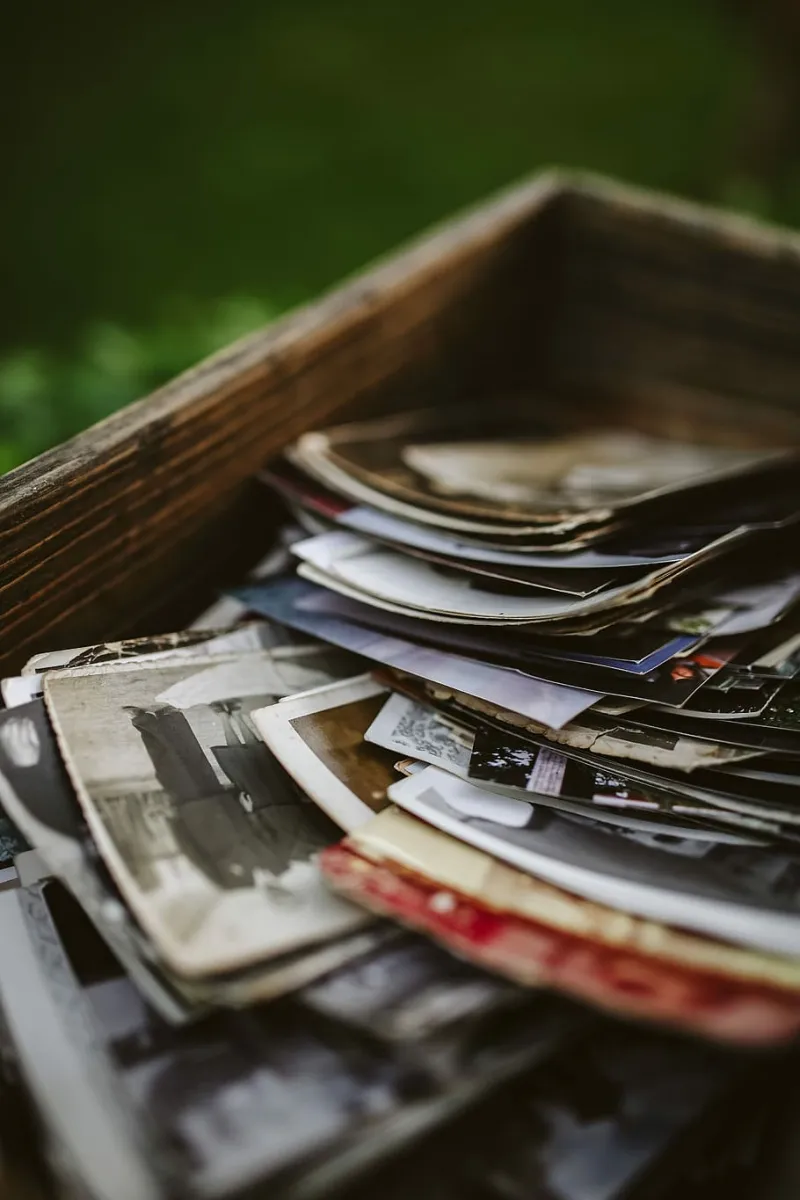
Photo: Farbadinzo, CC BY 4.0, via Wikimedia Commons
Most people who create with intention understand that paper is never simply a neutral surface. It arrives with character — a particular weight, a specific tooth, a finish that either invites or resists the tools brought to it. What is less often considered is what happens when those sheets accumulate. When a decade's worth of journals, sketches, letters, and project folios are gathered together, something remarkable emerges: not merely a body of work, but a documentary record of the person who made it.
This is the paper memoir — an archive that speaks in textures and weights rather than words alone.
The Unconscious Autobiography of Material Choice
Every creative practitioner makes paper choices that reflect something beyond practicality. The undergraduate artist who reaches for the cheapest newsprint available is expressing something about resources, perhaps, but also about expectations — a willingness to risk, to waste, to experiment without consequence. The same person, fifteen years later, selecting a cold-press cotton rag for a finished illustration, is making an entirely different statement about discipline, commitment, and the value they now assign to their own labor.
When those two moments exist within the same archive, the contrast is revelatory. The shift in material is not incidental. It mirrors shifts in confidence, in professional identity, and in the relationship between the maker and the act of making itself.
Paper choices are, in this sense, a form of self-portraiture — one rendered not in pigment but in gsm weights and surface finishes.
What a Paper Archive Actually Contains
A thoughtfully maintained creative archive is far more than a storage system. At its most meaningful, it functions as a layered record of several simultaneous histories:
The history of your craft. The tools you favored, the techniques you practiced, and the aesthetics you pursued all leave evidence in the papers you chose to work on. A period of dense, heavily worked charcoal drawings will have demanded something entirely different from a phase of delicate watercolor studies or meticulous hand-lettering. The paper selections across those phases tell the story of your technical evolution without a single written word.
The history of your values. Creatives who come to care about environmental sustainability, for instance, often find that their paper choices shift accordingly — moving toward recycled stocks, FSC-certified sheets, or papers from mills with transparent production practices. Archiving those transitions documents not just what you made, but what began to matter to you.
The history of your seasons. There is something almost geological about a paper archive. Like sedimentary layers, the materials from different life periods carry distinct signatures. The small, portable notebooks of a traveling period. The heavy, oversized sheets of a studio residency. The refined personal stationery selected during a time of intentional correspondence. Each stratum holds a kind of atmospheric record of where you were and how you were living.
Beginning the Intentional Archive
For those who have never approached their accumulated papers as an archive, the process of beginning can feel overwhelming. Years of work may be stored in folders, boxes, or rolling flat files without any organizing logic. The good news is that the archive does not need to be retrospectively perfect to be meaningful.
Start with what you have. Gather physical materials — finished pieces, abandoned experiments, journals, letters received and drafts of letters sent. Notice the papers. Run your fingers across surfaces. Pay attention to what you recognize and what surprises you. Even a disorganized collection, once physically assembled, will begin to reveal patterns.
From there, consider a simple organizational framework that honors both chronology and category. Chronology matters because it preserves the narrative arc of development. Category matters because it allows you to trace the evolution of specific practices — how your journaling papers have changed over time, or how the stock you choose for client-facing work has shifted as your professional confidence has grown.
Labeling is worth doing carefully. A small notation on the back of a stored sheet — the paper's name or type, the approximate date, the project it belonged to — transforms an object into a document. Years from now, that notation will matter enormously.
The Role of Premium Paper in a Lasting Archive
Not all papers age equally. This is a practical reality that any serious archivist must confront. Acidic papers yellow and become brittle. Cheap printing stocks degrade in ways that obscure the work they carry. Papers produced with wood pulp and without buffering agents are inherently less stable than those made from cotton rag or with archival-quality construction.
For work that is intended to last — and a personal creative archive is, by definition, intended to last — the quality of the paper is not a luxury consideration. It is a preservation imperative. Choosing archival-grade materials for your most significant creative work is an act of respect for both the work itself and the future viewer of your archive, whether that viewer is a grandchild, a student, or simply an older version of yourself.
This does not mean that every experimental sketch must be committed to the finest cotton rag available. It does mean that the work you consider significant deserves a material that will honor it across time.
Reading Someone Else's Archive
There is a particular intimacy to encountering the paper archive of another creative. The letters of Georgia O'Keeffe, the notebooks of Frederick Law Olmsted, the annotated manuscripts of American writers held in university special collections — these are not merely historical artifacts. They are material conversations across time, in which the paper itself participates.
When you hold a sheet that someone else chose deliberately, worked on with care, and preserved, you are not simply reading their words or studying their images. You are receiving information about how they thought about the act of making — what they deemed worth the effort of a finer sheet, what they committed casually to a scrap, what they saved and what they discarded.
Building your own archive is, in part, an act of generosity toward that future reader. It is an acknowledgment that your creative life has a shape worth preserving.
The Archive as Ongoing Practice
Perhaps the most important reframe for any creative who wishes to build a meaningful paper archive is this: the archive is not a destination. It is a practice, accumulated gradually through consistent, intentional choices made at the moment of creation.
This means selecting your papers with some awareness of their future life within the archive. It means storing work with care rather than convenience. It means resisting the impulse to discard the pieces that feel unsuccessful, because failure, too, is part of the record.
Over time, the archive becomes something genuinely irreplaceable — a document of a creative life rendered in the most honest medium available. Not the edited narrative of a portfolio, curated for professional presentation, but the full and truthful account of a person who made things, cared about what they made on, and paid enough attention to leave behind something worth finding.