Crafted with Conscience: The American Papermakers Reimagining What Sustainable Luxury Looks Like
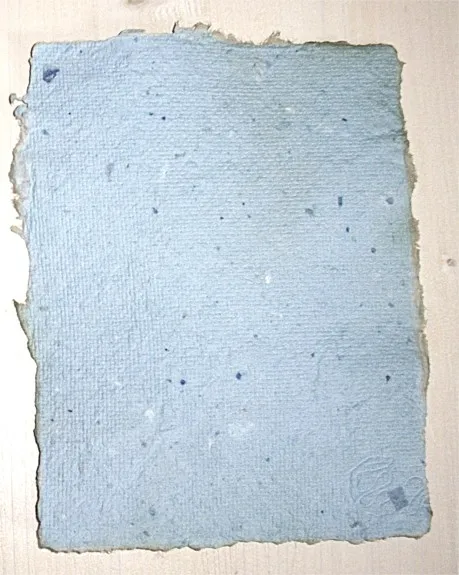
Photo: Benutzer:Memnon, CC BY-SA 3.0, via Wikimedia Commons
For most of the twentieth century, the paper industry operated on a straightforward industrial logic: produce more, produce faster, and keep costs low enough to make paper feel disposable. That logic served mass markets well. It also generated staggering environmental costs — clear-cut forests, chemical-intensive bleaching processes, and a culture that treated paper as a commodity to be consumed rather than a material to be valued.
In 2024, a different logic is gaining ground. Across the United States, a dispersed but growing network of small-batch papermakers is building a compelling counter-argument — one sheet at a time. These makers are not simply adding a sustainability label to an otherwise conventional product. They are rethinking the entire lifecycle of paper, from the fibers they source to the energy they use to the way they communicate value to their customers. And the creative community — designers, artists, letterpress printers, bookmakers, and stationery professionals — is listening.
The Problem with Conventional Paper Production
To appreciate what the artisanal papermaking movement represents, it helps to understand what it is reacting against. Conventional paper manufacturing is among the most resource-intensive industrial processes in existence. The production of virgin wood-pulp paper requires enormous quantities of water, significant chemical inputs for pulping and bleaching, and substantial energy throughout the drying and finishing process. Global deforestation linked to pulp and paper production remains a serious concern, despite industry-level certification programs that have improved practices in some regions.
Beyond the environmental footprint, mass production has also flattened the creative experience of paper itself. When paper is made at industrial scale, consistency is the paramount virtue — every sheet must be identical to every other sheet within a given specification. The natural variation that characterizes handmade or small-batch papers, the slight irregularities in texture, the subtle differences in how a sheet takes ink, is engineered out of the product entirely. What remains is reliable, functional, and almost entirely without character.
For creatives who approach their materials with discernment, that absence of character is its own kind of loss.
Small-Batch Makers Leading the Shift
The American papermaking revival draws from several distinct traditions. Hand papermaking, rooted in techniques brought from Europe and Asia centuries ago, has maintained a dedicated community of practitioners through organizations like the Friends of Dard Hunter and academic programs at institutions including the University of the Arts in Philadelphia and North Bennet Street School in Boston. These practitioners have kept alive the knowledge of how to transform fiber into sheet through entirely manual processes — knowledge that is now informing a new generation of small-scale commercial operations.
In New England, several small studios have built viable businesses around reclaimed and recycled fiber sources. Cotton rag — the traditional raw material of fine paper before wood pulp became dominant — is experiencing a meaningful renaissance. Sourced from textile manufacturing offcuts, worn denim, and post-consumer cotton goods, rag-based papers offer exceptional durability, a distinctive tactile quality, and a substantially lower environmental burden than virgin wood-pulp alternatives. Studios working in this tradition produce papers that carry a visible history in their fiber — threads, flecks of color, and subtle texture variations that make each batch genuinely unique.
In the Pacific Northwest, a different set of innovations is taking shape. Makers in Oregon and Washington have been exploring plant-based fiber alternatives beyond traditional cotton and wood, incorporating agricultural byproducts such as straw, hemp, and even invasive plant species into their paper production. Hemp-based papers, in particular, have attracted significant attention for their combination of strength, surface quality, and relatively low environmental impact — hemp requires minimal water and no pesticides to cultivate and yields fiber that can be processed with less chemical intervention than wood pulp.
Redefining Luxury Through Scarcity and Story
What distinguishes the most successful sustainable papermakers is not simply their environmental credentials — it is the way they have reframed the meaning of luxury itself. In mass-market terms, luxury paper means a heavier weight, a brighter white, a more consistent surface. In the artisanal context, luxury means something richer and more complex: provenance, craft, intentionality, and the kind of limited availability that makes each sheet feel genuinely special.
This reframing resonates powerfully with a segment of the creative market that has grown weary of anonymous materials. A designer who specifies a handmade cotton-rag paper for a client's wedding stationery is not simply making an aesthetic choice — they are making an argument about value, about the difference between something produced and something made. That argument is increasingly legible to clients and end recipients who have themselves become more attuned to questions of origin and impact.
The storytelling dimension of artisanal paper is not incidental to its appeal; it is central to it. When a papermaker can tell the story of where the fiber came from, how it was processed, and what makes a particular batch distinctive, the paper becomes more than a substrate. It becomes a material with a biography — and that biography transfers, at least in part, to whatever is created on its surface.
The Creative Community's Evolving Purchasing Philosophy
The shift toward intentional paper purchasing reflects a broader evolution in how American creatives think about their material choices. The quality-over-quantity principle — buying fewer, better things rather than accumulating large quantities of undifferentiated supplies — has gained significant traction across the design and fine art communities over the past several years.
This shift has practical dimensions. A letterpress printer who switches from commodity paper to a small-batch cotton sheet will almost certainly use fewer sheets overall, because each impression becomes more deliberate and the waste tolerance drops. A calligrapher who invests in a premium surface designed for their specific tools will produce better work with less material, because the paper is working with them rather than against them. In both cases, the higher per-sheet cost of artisanal paper is partially offset by more efficient and more satisfying use.
There is also a growing awareness among creatives of the downstream effects of their purchasing decisions. Choosing paper from a domestic small-batch maker supports a craft tradition, reduces supply chain complexity, and keeps economic activity within communities that are often building genuinely sustainable local enterprises. These considerations are increasingly factored into purchasing decisions by designers and artists who understand that the materials they choose carry implications beyond the immediate creative project.
What Intentional Paper Looks Like in Practice
For creatives ready to explore this landscape, the entry point is curiosity. Seek out makers who are transparent about their fiber sources, their processing methods, and their environmental commitments. Look for certifications where they exist — Forest Stewardship Council (FSC) certification, for instance, provides meaningful assurance around responsible fiber sourcing — but also look beyond certification to the actual story of how a paper is made.
Request samples before committing to larger quantities. Artisanal papers, precisely because of their character and variation, deserve to be tested with your specific tools and techniques before they become part of your workflow. The investment of time in that evaluation process is itself an act of intentionality — a signal that you are approaching your creative materials with the same seriousness you bring to your creative work.
Sustainable luxury, as the best American papermakers are demonstrating, is not a contradiction. It is a commitment — to craft, to transparency, to the understanding that what we make is shaped, in ways both visible and invisible, by the materials we choose to make it with.