Analog First: How Designers, Writers, and Artists Are Reclaiming Their Creative Process Through Paper
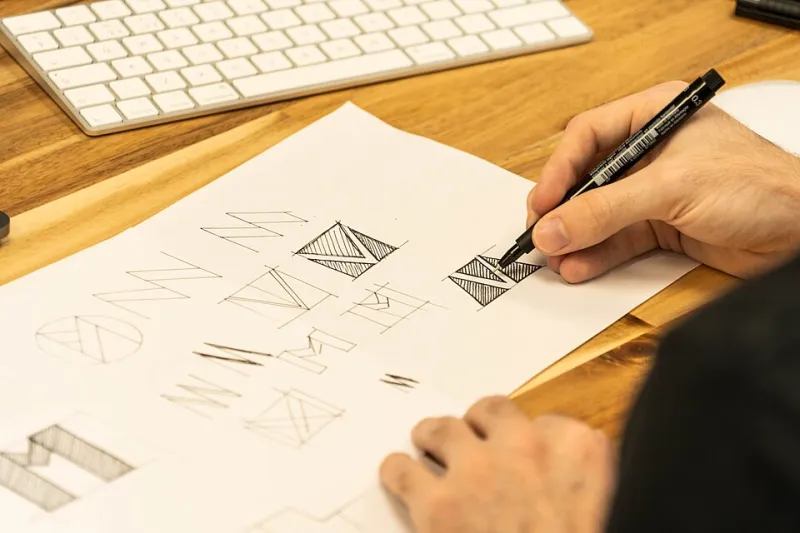
Photo: Claireneon, CC BY-SA 4.0, via Wikimedia Commons
The cursor blinks. The toolbar waits. The canvas is technically infinite, the undo button perpetually available. And yet, for a growing number of creative professionals across the United States, the digital workspace — for all its apparent freedom — has quietly become a constraint.
They are walking away from their screens, at least at the start. They are reaching for paper.
This is not a romantic rejection of technology. It is something more deliberate and, arguably, more interesting: a methodical recalibration of how and where creative thinking actually happens. Designers are sketching layouts by hand before opening their software. Novelists are drafting entire chapters in longhand before transcribing. Brand strategists are mapping campaigns on large sheets spread across studio floors. The tool has changed. The quality of the output, many report, has changed with it.
The Problem with Infinite Possibility
Digital environments are, by design, environments of abundance. Every font is available. Every color is selectable. Every layout can be revised in seconds. This abundance, counterintuitively, can paralyze rather than liberate.
Psychologists have studied this phenomenon extensively under the umbrella of decision fatigue and choice overload. When the number of options is effectively limitless, the cognitive cost of each decision rises. Creatives working inside feature-rich software face this challenge constantly — and many are beginning to recognize it.
Paper imposes constraints. A sheet has a fixed dimension. A pen mark is committed. The physical act of drawing a line requires a decision that cannot be undone with a keystroke. These constraints, rather than limiting creative output, appear to sharpen it. When every stroke carries weight, the mind becomes more deliberate. Ideas that survive the friction of physical commitment tend to be stronger ideas.
This is why so many professionals describe their paper practice not as a step backward in their workflow, but as a clarifying first act — a way of filtering signal from noise before the digital environment introduces its particular form of distraction.
The Prototype That Feels Real
For product designers and visual communicators, paper prototyping has been a recognized practice for decades. But the current movement extends well beyond wireframing and thumbnail sketches. Professionals are using paper to prototype emotional tone, narrative arc, spatial relationships, and conceptual frameworks — work that was once assumed to belong exclusively to the screen.
A book designer working on a literary anthology might spend an afternoon with a stack of sheets, folding and cutting to understand how a reader's hand will interact with a finished volume. An advertising creative director might fill a dozen pages with headline variations written in longhand, the physical act of writing slowing the mind enough to hear the rhythm of language. An architect might return to trace paper not because the software cannot do the job, but because the hand and the eye communicate differently when the medium is physical.
In each case, the paper is not a workaround. It is a workspace with properties that digital tools do not replicate: texture under the fingertip, resistance from the page, the visual evidence of a thought process that accumulates across a sheet rather than disappearing beneath layers and versions.
Why Paper Quality Matters to This Practice
If the goal were simply to make marks, any paper would serve. But creatives who have developed a serious paper practice tend to become particular about the sheets they use — and for reasons that are functionally sound, not merely aesthetic.
The surface of a paper affects how ink flows, how pencil builds, how a brush releases pigment. A sheet that feathers or bleeds disrupts concentration and obscures intention. A sheet that buckles under a wet medium pulls attention away from the idea and toward the material's failure. Conversely, a premium sheet that responds predictably to the tool in hand becomes, over time, nearly invisible — the medium recedes and the thinking comes forward.
For professionals who have made paper a deliberate part of their creative infrastructure, the quality of the sheet is not an indulgence. It is a functional specification, as considered as the choice of software or studio lighting.
There is also something less quantifiable at work. A high-quality sheet communicates seriousness to the person using it. It signals that what is being recorded matters. This psychological dimension is not trivial. The care embedded in a well-made piece of paper can quietly elevate the care brought to the work done upon it.
Reshaping the Workflow, Not Replacing It
It is worth being precise about what this movement is and is not. The designers, writers, and artists leading this shift are not abandoning digital tools. They are reordering their relationship with those tools — placing paper earlier in the process, and treating the move to screen as a deliberate transition rather than a default starting point.
The typical structure looks something like this: ideation and early exploration happen on paper, where speed of thought and freedom from interface decisions allow raw material to accumulate. Refinement, production, and distribution then move to digital environments, where the precision and efficiency of software genuinely earn their place.
This sequencing allows each medium to do what it does best. Paper is fast for thinking, slow for committing — a productive tension. Digital is precise for execution, but noisy for early-stage exploration. The professionals who have found this rhythm describe a measurable improvement in the quality of the work that eventually reaches the screen, because it has already been stress-tested in a more demanding environment.
The Infrastructure of Intentional Work
The word that surfaces repeatedly in conversations with creatives who have adopted this practice is intentional. They are not using paper because it is fashionable or because it provides a charming contrast to their otherwise digital lives. They are using it because it makes them better at their work.
This is, at its core, a question of creative infrastructure. The serious professional attends to every element of the environment in which they work — the quality of light, the ergonomics of the desk, the calibration of the monitor. Paper, chosen with equivalent care, belongs in that same category of considered investment.
In an era when the default is digital and speed is presumed to be the primary virtue, the choice to begin on paper is a quiet but consequential act of resistance. It is a declaration that the quality of the thinking matters more than the speed of its production. It is, in the truest sense, the analog-first approach: not a step backward, but a more deliberate way forward.