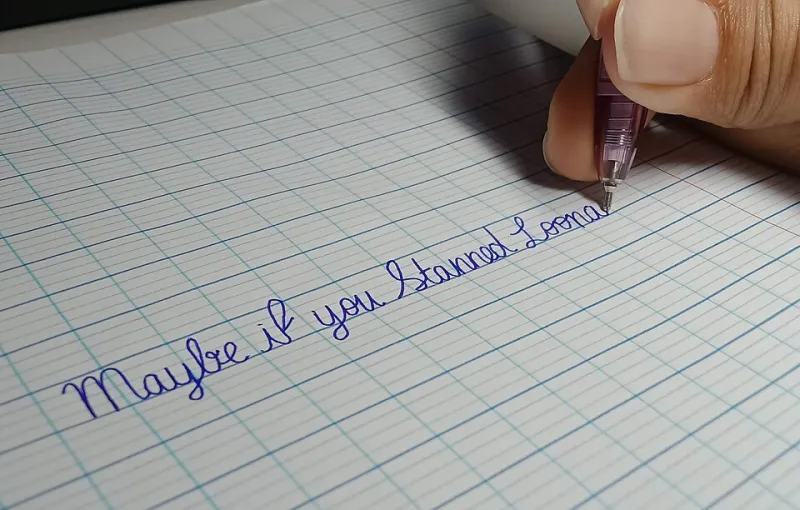
The Intentional Stash: How to Curate a Paper Collection That Serves Your Creativity
Photo: IPPA photographer, CC BY 4.0, via Wikimedia Commons
There is a particular pleasure in acquiring beautiful paper. A sheet of cold-pressed cotton rag, a packet of translucent Japanese tissue, a stack of richly textured handmade cards—each purchase arrives with the quiet promise of future creativity. Yet for many artists, calligraphers, bookbinders, and designers, that promise has a way of compounding. Drawers fill. Flat files overflow. The collection that once felt like a creative asset begins to feel like a source of low-grade anxiety.
This is the paradox at the heart of serious paper collecting: the very abundance that was meant to inspire can, over time, produce exactly the opposite effect. Understanding why this happens—and how to correct it—is among the more practical skills a creative professional can develop.
Why Paper Accumulates Differently Than Other Supplies
Paper occupies a unique psychological category among creative materials. Unlike paint that depletes or pencils that wear down, paper is essentially inert. It does not demand use. It waits, silently, in whatever drawer or portfolio case you assign it, neither improving nor degrading in any obvious way. This durability is part of its appeal, but it also removes the natural pressure that consumable supplies exert.
There is also the matter of scarcity perception. Limited-edition papers, seasonal releases from small mills, and handmade sheets produced in small batches carry an implicit urgency. When a particular grain or color disappears from a maker's catalog, the instinct to stockpile before the next opportunity arises is entirely understandable. The result, however, is often a collection shaped more by anxiety than by genuine creative need.
Research in consumer psychology consistently shows that excessive choice erodes decision-making capacity—a phenomenon commonly called decision fatigue. When a creative sits down to begin a project and faces forty varieties of paper rather than four, the selection process itself becomes a form of labor. The collection that was meant to empower becomes a barrier.
The Guilt Dimension
Accompanying the clutter is frequently a quieter problem: guilt. Many artists carry a persistent, low-level discomfort about paper they have purchased but never used. A sheet of gorgeous Arches watercolor paper sits untouched because it feels too precious to risk on an uncertain experiment. A stack of letterpress-weight stock remains in its sleeve because no project has yet seemed worthy of it.
This hesitation is worth examining closely, because it reveals a subtle misunderstanding about what a paper collection is for. Premium paper is not a trophy. It is a working material. The guilt that attaches to unused sheets often reflects an inflated sense of their irreplaceability—a belief that each piece is a one-time opportunity rather than a renewable resource. Reframing your collection as a set of tools, rather than a set of artifacts, is among the most liberating shifts a creative can make.
A Framework for Purposeful Acquisition
Building a collection that serves your practice rather than burdening it requires a consistent evaluative process applied at the point of purchase—before the sheet ever reaches your studio. The following questions provide a useful structure.
Does this paper address a specific technical need? If you regularly work in gouache on toned grounds, a sheet of warm-gray Italian printmaking paper has a clear application. If you have no established practice that calls for it, its presence in your collection is speculative at best.
Have you used the last paper of this type you acquired? If three sheets of similar weight and texture are already waiting in your flat file, a fourth is unlikely to unlock anything new. Resist the impulse to collect variations of what you already own in abundance.
Is this a considered purchase or an impulse driven by scarcity? Limited-edition releases and sale pricing are legitimate reasons to act, but only when the paper itself meets your actual requirements. Urgency is a poor substitute for relevance.
Can you describe a specific project this paper would serve? You need not have the project underway, but the ability to articulate a plausible use—a series of monotype prints, a hand-bound journal, a set of illustrated correspondence cards—is a meaningful indicator that the acquisition is purposeful.
Storage as a Curatorial Act
How you store paper shapes how you relate to it. A flat file with unlabeled, unsorted sheets is an archaeological site, not a resource. Organizing your collection by weight, surface texture, and intended application transforms retrieval from a scavenger hunt into a deliberate act of creative selection.
For those working in smaller spaces, acid-free portfolio sleeves stored vertically in a shallow drawer or standing on edge in a wide bin allow for easy browsing without requiring a full flat file. Labeling each sleeve with basic specifications—weight in gsm, fiber content, surface finish, and supplier—eliminates the need to handle every sheet simply to identify it.
Regular audits, conducted seasonally or at the start of each major project cycle, help prevent accumulation from becoming inertia. Pull everything out. Handle each sheet. Ask, honestly, whether it still belongs in your active collection or whether it would serve better as a gift to a fellow artist, a donation to a school, or simply as an experiment in a sketchbook that has been waiting too long.
Quality Over Quantity, Always
The most productive paper collections tend to be narrow and deep rather than broad and shallow. A working artist who maintains ten to fifteen well-chosen varieties—each selected for a clear purpose, each understood thoroughly—will consistently outperform the one who owns a hundred sheets of everything but has mastered none of them.
Authentique paper is not acquired to be admired from a distance. It is acquired to be used, studied, marked upon, and understood. The stash that best serves your creative practice is the one that reflects genuine intention at every stage—from the moment of acquisition to the moment a sheet finally meets your hand.