Ink and Intention: The Neuroscience Case for Writing by Hand on Quality Paper
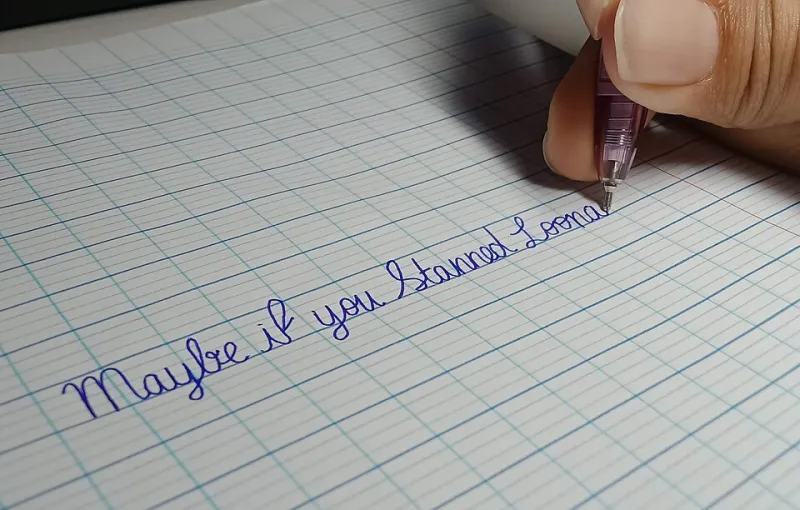
Photo: Jiafei Slay Queen, CC0, via Wikimedia Commons
There is a particular moment that many writers, artists, and thinkers describe in nearly identical terms: the moment a quality pen meets a sheet of premium paper and something shifts. The resistance is just right. The ink blooms cleanly across the surface. The hand moves with a kind of gravity, a deliberateness, that no keyboard has ever quite replicated. This is not sentiment. Increasingly, it is science.
As digital tools have come to dominate every corner of professional and creative life in the United States, a quieter counter-movement has been gaining momentum. Journals sell out. Fountain pen communities thrive online. Stationery boutiques report record interest from younger demographics who grew up entirely screen-native. What is driving this return to the analog? The answer, researchers and practitioners suggest, begins not with nostalgia but with the brain itself.
What Happens in the Brain When You Write by Hand
The cognitive science of handwriting is more robust than many people realize. A landmark 2014 study published in Psychological Science by Pam Mueller and Daniel Oppenheimer demonstrated that students who took notes longhand retained conceptual information significantly better than those who typed. The researchers attributed this not merely to slower transcription speed, but to the way handwriting forces the writer to process, synthesize, and reframe information in real time.
More recent neuroimaging research has expanded this picture considerably. A 2023 study from the Norwegian University of Science and Technology found that the act of handwriting activates far more regions of the brain than typing does—including areas associated with memory formation, language processing, and sensorimotor integration. In essence, when you write by hand, your brain is doing more. The physical act of forming letters engages neural pathways that passive digital input simply does not reach.
For creatives and knowledge workers, this distinction carries meaningful implications. Brainstorming on paper is not the same cognitive exercise as brainstorming on a screen. The hand, the eye, and the mind are collaborating in a fundamentally different register—one that many practitioners find more generative, more honest, and more revealing of what they actually think.
The Role of the Paper Itself
Here is where the conversation shifts from neuroscience to craft, and where the choice of paper becomes more than an aesthetic preference.
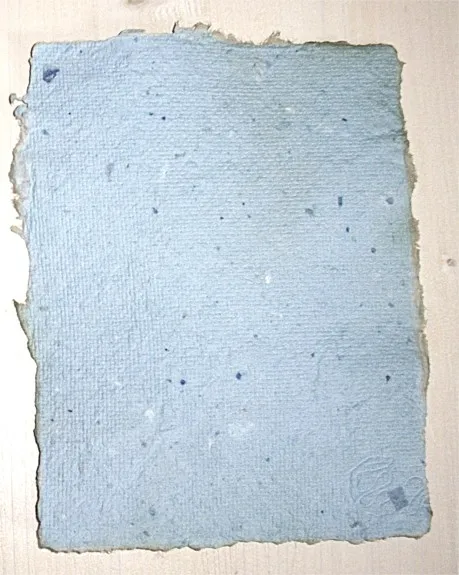
Not all paper is created equal, and the surface on which you write has a measurable effect on the quality of the writing experience—and, by extension, on the quality of thought it produces. A sheet of premium cotton-content writing paper offers a tactile feedback loop that wood-pulp alternatives cannot match. The slight texture of a laid finish invites the pen to travel with intention. The weight of a 90 GSM sheet communicates a kind of seriousness, a signal to the writer that what is being set down here has value.
Elena Vasquez, a graphic novelist based in Portland, Oregon, describes the shift she noticed after replacing inexpensive spiral notebooks with archival-grade writing paper. "I started writing more slowly," she explains. "And I think that's actually the point. The paper asked something of me. It slowed me down enough to actually hear what I was trying to say."
This phenomenon—what some researchers refer to as the "friction dividend"—suggests that a degree of productive resistance in the writing process can enhance focus and reduce the cognitive noise that comes with frictionless digital input. Premium paper, by its very nature, introduces that friction in the most pleasurable of ways.
Attention as a Creative Resource
One of the most consistent findings in contemporary cognitive science is that deep, sustained attention is among the most valuable and most endangered cognitive resources in modern life. The average American adult now encounters thousands of digital interruptions each day, and the cumulative effect on sustained creative thinking is well-documented.
Writing by hand on quality paper creates what psychologists sometimes call a "mono-channel" experience. There are no notifications, no browser tabs, no algorithmic suggestions competing for your attention. There is only the page, the pen, and the thought you are attempting to articulate. For many practitioners, this constraint is not a limitation—it is a liberation.
Journalist and essayist Marcus Webb, who writes his first drafts entirely by hand, puts it plainly: "The page doesn't ask me to do anything except write. Every digital tool I own asks me to do seventeen other things simultaneously. The difference in the quality of my thinking is not subtle."
This is, in many respects, the core argument for premium paper as a deliberate creative tool. It is not about rejecting technology. It is about recognizing that different cognitive tasks benefit from different environments, and that the analog page—particularly one made with care and quality—creates conditions that screens cannot easily replicate.
Memory, Emotion, and the Written Record
Beyond the cognitive benefits of the writing process itself, there is the matter of what a handwritten page becomes over time. Handwritten documents carry an emotional charge that digital files rarely achieve. They preserve not just content but context—the pressure of the pen, the particular slant of a hurried note, the ink that ran slightly where a thought arrived too quickly.
Psychologists who study emotional memory have long noted that handwritten letters, journals, and notes occupy a distinct category in personal archives. They are, in a very real sense, physical evidence of a mind at work. For this reason, the choice to write by hand on paper of lasting quality is also a choice about what endures—what you leave behind for yourself, and perhaps for others.
Reclaiming the Practice
For those considering a return to handwriting as a regular practice, the entry point matters. Beginning with paper that rewards the experience—that does not bleed, feather, or buckle under a quality ink—removes the most common frustrations that discourage new practitioners. It is, in the most practical sense, an investment in the habit itself.
The digital age has not made handwriting obsolete. If the science is to be believed, it has made it more valuable. In a world of infinite, frictionless input, the deliberate act of setting a pen to a quality sheet of paper is a form of cognitive hygiene—a way of slowing down enough to think clearly, to remember deeply, and to create with the full engagement of the human mind.
That, in the end, is what premium paper has always offered. Not luxury for its own sake, but the conditions in which genuine creative work becomes possible.