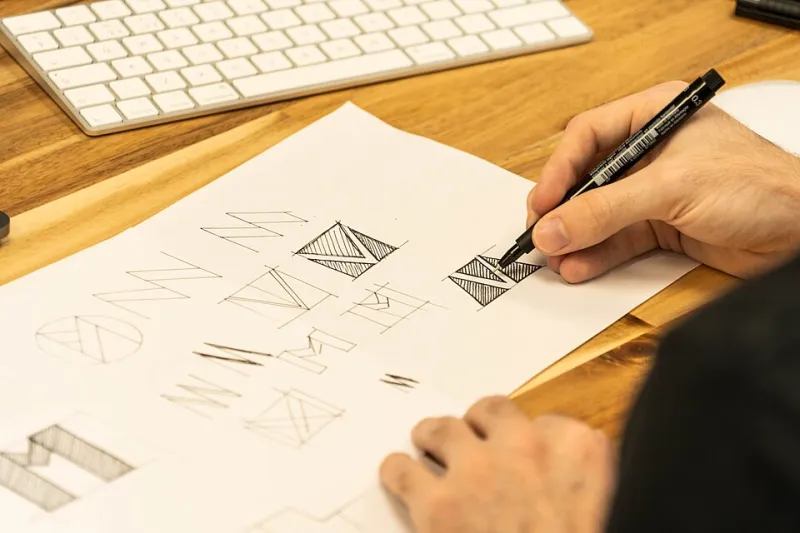
Before the First Mark: Why the Sheet You Choose Sets the Tone for Everything That Follows
Photo: Biswarup Ganguly , CC BY 3.0, via Wikimedia Commons
There is a particular kind of stillness that descends when you stand before a flat file drawer, or run your fingers along a shelf of carefully stored sheets, searching for the right paper before a project begins. It does not feel like procrastination. It does not feel like indecision. It feels, if you have ever experienced it, like preparation in the truest sense—a clearing of mental space, a quiet declaration of intent.
For a growing number of creatives across the United States, the act of selecting paper before beginning work has become as deliberate and meaningful as any other element of their practice. It is not a step they skip. And increasingly, researchers and practitioners alike are beginning to understand why.
The Psychology of the Pre-Work Ritual
Behavioral psychologists have long studied the role of pre-performance rituals in shaping outcomes. Athletes rehearse them. Musicians rely on them. What makes a ritual effective, according to research published in organizational behavior journals, is not any supernatural property but rather its function as a cognitive signal: this is the moment things become serious.
When a creative professional selects a specific sheet of paper with care and intention—weighing its weight, its texture, its surface finish against the demands of the project at hand—that selection process performs exactly this function. It marks the threshold between ordinary time and creative time.
"Grabbing whatever's on top of the printer has a feeling to it," says Margot Ellison, a Chicago-based letterpress printer and paper artist. "It says: this doesn't really matter. But when I spend five minutes pulling out different sheets, holding them up to the light, thinking about which one is right for this particular piece—something shifts. I'm already in the work before I've touched a tool."
Ellison is not alone in this observation. The deliberate choice of material, it turns out, is a form of pre-commitment—a psychological contract with yourself about the seriousness of what you are about to do.
Surface, Weight, and the Confidence Factor
There is also a more tactile dimension to this phenomenon, one that operates below the level of conscious deliberation. The physical properties of a sheet of paper—its tooth, its heft, its warmth or cool smoothness beneath the hand—send continuous sensory feedback to the brain throughout the creative process. When that feedback is pleasurable and appropriate to the task, it sustains engagement. When it is jarring or indifferent, it can subtly undermine confidence.
David Kwon, a Portland-based illustrator who works primarily in ink and watercolor, describes choosing his paper as "the first creative decision of any project."
"If I'm working on something delicate and lyrical, I want a surface that feels that way before I start," he explains. "Hot press, smooth, almost luminous. If I'm going for something rougher and more expressive, I want a sheet with real texture—something that pushes back a little. The paper isn't just a surface. It's a collaborator. And choosing the right collaborator before you begin changes your whole orientation."
This sensory alignment between material and intention is not merely poetic. Research in embodied cognition suggests that the physical properties of the tools and surfaces we work with influence the cognitive and emotional states we bring to creative tasks. A sheet of premium paper, chosen with care, can prime the mind for the quality of attention the work deserves.
The Ritual in Practice: How Creatives Structure the Choice
What does a deliberate paper selection ritual actually look like? Across the creatives we spoke with, a few common threads emerged—though the specifics vary considerably by discipline and personality.
For some, it begins with a question of scale. Brooklyn-based graphic designer Nadia Ferris keeps a curated sample collection organized by weight and finish. Before beginning any client project, she pulls three or four candidate sheets and lays them side by side on her light table. "I'm thinking about how the design will feel in someone's hands," she says. "Paper is part of the message. I won't start sketching until I've made peace with the surface."
For others, the ritual is more intuitive. James Alvarado, a San Francisco-based calligrapher and book artist, describes walking to his flat files each morning and simply waiting. "I don't always know what I'm looking for until I find it," he says. "But that searching—that openness—is itself the ritual. It puts me in a receptive state. I'm not forcing anything. I'm listening."
What unites these approaches is the refusal to treat paper as a neutral or interchangeable substrate. The sheet is understood, from the very first moment, as an active participant in the work.
Why Scarcity and Specificity Sharpen Focus
There is another psychological mechanism at work in the deliberate selection of premium paper: the awareness that the material has value. When you work on a sheet that you chose carefully—one that carries a certain cost, a certain rarity, a certain beauty—you are less likely to squander it.
This is not about anxiety or preciousness. It is about the clarifying effect of constraint. When every sheet is precious, every mark matters. The creative mind sharpens. Decisions become more considered. The work, almost inevitably, rises to meet the material.
"I notice I sketch differently on a beautiful sheet than I do on copy paper," admits Ellison. "Not worse, not more cautiously—better. More honestly. Like I owe it something."
This dynamic is well recognized in craft traditions. The Japanese concept of shokunin kishitsu—a craftsperson's spirit, or the devotion to one's materials and process—reflects a cultural understanding that the quality of attention we bring to our materials shapes the quality of what we make. Choosing your paper before you begin is, in a very real sense, an act of respect: for the material, for the work, and for your own creative capacity.
Building Your Own Paper Ritual
If the idea of a pre-project paper selection ritual resonates, the practical entry point is simpler than it might appear. It begins with having something worth choosing from.
A modest but carefully curated collection of papers—varied in weight, texture, and character—gives you the raw material for this practice. It need not be large. Even a dozen sheets representing different surfaces and qualities can transform the moment of selection from an afterthought into a genuine act of creative intention.
From there, the ritual is yours to develop. Some creatives benefit from a structured approach: defining the project's emotional register first, then selecting a sheet that matches it. Others prefer a more open-ended practice, allowing the paper itself to suggest a direction. Neither is correct. What matters is the pause—the moment of deliberate engagement with your material before the work begins.
In a creative culture increasingly dominated by digital immediacy and frictionless production, that pause is itself a form of resistance. It says: this work is worth preparing for. It says: the material I choose is part of the meaning I make.
Before the first mark, there is the sheet. And the sheet, chosen well, changes everything that follows.