Draft in Private, Publish with Confidence: The Case for a Paper-First Creative Process

There is a particular kind of paralysis that arrives the moment a creative professional opens a blank document. The cursor blinks. The format feels permanent. The audience, however distant, feels present. What should be a space for exploration becomes, almost immediately, a stage — and stages demand performance.
This phenomenon has a name in psychological literature: evaluation apprehension. And for many working creatives across the United States, the antidote has turned out to be surprisingly analog. Premium paper journals, used deliberately before any digital work begins, are quietly reshaping how ideas move from raw thought to published form.
The Screen Has an Audience Problem
Digital tools are extraordinary. They are also, by their very nature, oriented toward output. A word processor is designed to produce a document. A design application is built to render a finished file. Even a notes application carries with it an implied assumption: that what you type is worth saving, organizing, and potentially sharing.
Physical paper carries no such assumption. A journal page has no autosave, no share button, no notification that someone has viewed your draft. It exists in a closed loop between hand and mind, and that privacy is not incidental — it is functionally significant.
When creatives write, sketch, or diagram on paper before touching a keyboard, they are effectively constructing a psychological buffer zone. The journal absorbs the messy, contradictory, half-formed material that precedes any genuine idea. It does so without judgment, without formatting requirements, and without the subtle pressure of a screen that looks, at all times, like it is waiting for something publishable.
What Tactile Engagement Actually Does
The relationship between the hand and the brain during physical writing is well-documented in cognitive research. The act of forming letters by hand activates neural pathways associated with memory consolidation and conceptual processing in ways that typing does not fully replicate. But for creative professionals, the implications extend beyond neuroscience into practical workflow.
When you draft on paper — particularly on a surface that rewards attention, a sheet with texture, weight, and a quality that makes the act of writing feel consequential — you slow down in a productive way. Thoughts that would be typed and immediately second-guessed are instead written and allowed to breathe. The friction of the pen against a well-made sheet creates a natural pace that encourages completion of a thought rather than its immediate revision.
This is not romanticism. It is mechanics. The journal becomes a first-pass processor, a space where ideas are tested against themselves before they are tested against an audience.
The Ritual as Creative Infrastructure
Among the creatives who have adopted a paper-first practice, the most consistent observation is that the ritual itself carries meaning. The act of opening a quality journal, selecting a pen, and committing to a session of unstructured drafting signals to the brain that a different mode of engagement has begun — one governed by exploration rather than production.
Many writers describe using their journals to exhaust the obvious interpretations of a topic before arriving at the angle worth publishing. Graphic designers report sketching ten or fifteen thumbnail concepts on paper before opening their design software, arriving at the screen with a direction already chosen rather than a question still unanswered. Visual artists use journal pages to work through compositional problems in a low-stakes environment, preserving the spontaneity that often disappears when a canvas or a final substrate is introduced too early.
In each case, the paper journal is functioning as a creative laboratory — a place where failure is not only acceptable but expected and even sought.
Choosing the Right Journal for the Work
Not all journals serve this function equally well. The quality of the paper matters more than it might initially seem, and not for reasons of indulgence.
A journal made with premium paper — one that accepts ink without feathering, that lies flat without resistance, that has a weight and surface finish appropriate to the tools being used — removes a category of friction that can interrupt the creative flow. When a page bleeds through, when a surface drags against the pen, when pages curl or resist the hand, the physical experience itself becomes a distraction. The mind is pulled from the idea and redirected toward the material.
Conversely, a journal that performs well disappears. The paper becomes invisible in the best possible sense, and what remains is the unobstructed relationship between thought and mark. For those using brush pens, fountain pens, fine liners, or pencil work with heavy shading, this distinction is not minor — it is the difference between a journal that serves the process and one that impedes it.
When selecting a journal for this kind of pre-digital drafting, consider the tools you use most frequently, the density of your mark-making, and whether you prefer ruled, dotted, or blank pages. Blank pages tend to serve visual thinkers and those who work across text and image simultaneously. Dotted grids offer structure without constraint. Ruled pages suit those whose primary medium is prose.
Translating the Analog Draft Without Losing What Made It Good
One of the practical challenges of a paper-first workflow is the translation step — the moment when journal content must move into a digital format for editing, design, or publication. Done carelessly, this step can inadvertently strip out the qualities that made the analog draft valuable.
Creatives who navigate this transition successfully tend to treat the journal not as a source to be transcribed but as a reference to be interpreted. Rather than typing out every word written on paper, they identify the core idea, the unexpected turn of phrase, the sketch that solved the compositional problem — and bring only that essential material forward. The rest remains in the journal, which is itself a record of the process.
This approach preserves the authenticity that paper drafting cultivates. The published work benefits from the depth of processing that happened on the page without being constrained by the literal content of every draft iteration.
The Journal as a Long-Term Asset
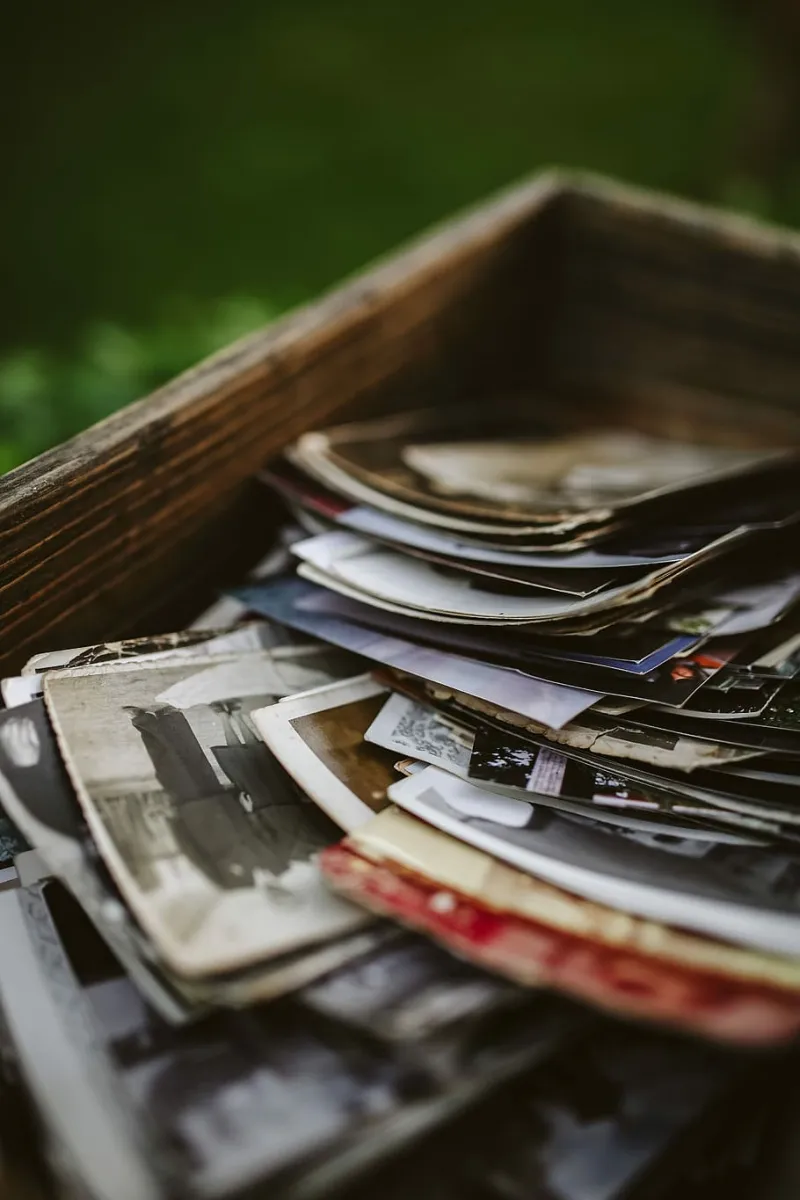
Beyond the immediate workflow benefit, there is a longer-term value in maintaining a consistent paper-first practice. Journals accumulate. Over months and years, they become a documentary record of creative development — a resource that can be returned to when a project stalls, when a new direction is needed, or when the origin of a particular idea has been forgotten.
For creative professionals who take their practice seriously, this archive has genuine utility. Ideas that were not ready at the time of drafting may become relevant later. Compositional approaches abandoned in one project may find their application in another. The journal, treated with the same intentionality as any other professional tool, becomes an investment in the continuity and depth of one's creative work.
The paper-first ritual, at its most fully realized, is not simply a technique for reducing screen anxiety. It is a commitment to a mode of creative engagement that values process as much as product — and that understands, correctly, that what appears on the page in private shapes everything that is eventually shared with the world.