The Art of the Mill Visit: Building Lasting Relationships with Independent Papermakers
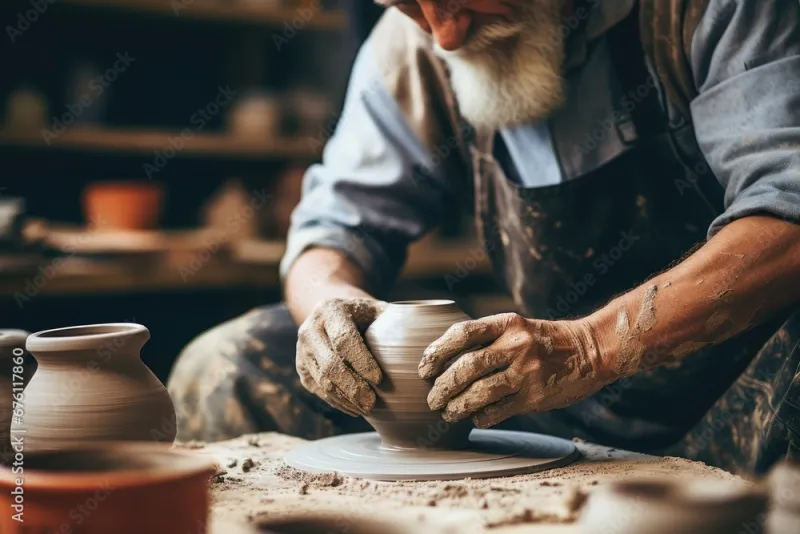
Photo: artisan papermaker working at traditional paper mill with handmade sheets drying, via as1.ftcdn.net
Most creatives who care about paper encounter it through a retailer — a specialty shop, an online supplier, a well-curated catalog. This is a perfectly reasonable starting point. But it is, in an important sense, the middle of the story. The beginning is elsewhere: in the mill, the studio, the workshop where the sheet was made by someone with a name, a philosophy, and a set of decisions that shaped every characteristic of the paper you are holding.
For those willing to trace the paper back to its source, direct relationships with independent papermakers offer something that retail channels cannot: access to knowledge, to process, to the maker's own thinking — and, often, to papers that are never listed in any catalog.
Building these relationships takes time and intention. But for the serious creative professional, the investment is rarely wasted.
Where to Begin: Finding Makers Worth Knowing
The United States has a small but genuine community of independent papermakers and artisanal mills. They range from single-person hand papermaking studios producing small batches of botanical or rag sheets, to modest but sophisticated operations offering specialty printing and writing papers for professional use. Locating them requires some effort, because most do not advertise in the channels where mass-market paper is sold.
Several starting points have proven consistently useful. The Friends of Dard Hunter, a North American organization dedicated to the art and history of papermaking, maintains connections to makers across the country and hosts an annual conference that draws serious practitioners from every corner of the field. The Hand Papermaking community, organized in part around the journal of the same name, is another productive network. Regional craft organizations, book arts guilds, and printmaking collectives frequently have direct connections to local papermakers who supply their members.
Social media, used carefully, is also a legitimate research tool. Independent papermakers often document their process on platforms like Instagram, where a sustained look at someone's feed can reveal a great deal about their approach, their materials, and their values before any direct contact is made. This preliminary research matters: reaching out to a maker with genuine knowledge of their work signals seriousness and tends to open doors that cold inquiries do not.
Making Contact: How to Introduce Yourself
The first message to an independent papermaker sets the tone for everything that follows. Makers who operate at the artisanal scale — which is to say, most of the people worth knowing — receive their share of inquiries that are purely transactional: requests for pricing, availability, and minimum order quantities, without any indication of who is asking or why.
A more effective approach begins with context. Explain who you are and what you do. Be specific about your creative practice — the media you work in, the projects you are pursuing, the qualities you look for in paper. Reference something particular about their work that you have genuinely observed. This demonstrates that your interest is substantive, not casual.
Ask questions that invite a real answer. Rather than opening with price and availability, ask about their process, their fiber sources, or the story behind a particular sheet. Independent makers are, almost without exception, deeply invested in their craft. A question that acknowledges that depth tends to generate a response in kind.
The Mill Visit: What to Observe and What to Ask
If the relationship develops to the point of a visit — and many will, if you have approached it well — arrive prepared to be a student. Even if you bring considerable knowledge of paper to the conversation, the maker's own environment will contain more information than any book or website can convey.
Pay attention before you ask questions. Notice the raw materials on hand: the fibers, the water source, the equipment. Observe the physical space — its scale, its organization, its relationship to the surrounding landscape. These details are not incidental. They are the context in which the paper is made, and they shape the sheet in ways both measurable and subtle.
When you do ask questions, prioritize process over product. Ask how decisions are made — why a particular fiber blend was chosen, how the drying method affects the surface, what the maker considers the defining characteristic of their work. Ask about challenges and failures as well as successes; the answers often reveal more about craft philosophy than any description of a finished sheet.
Bring samples of your own work, if it is appropriate to the visit. Showing a maker how you intend to use their paper is one of the most direct ways to open a conversation about custom or modified specifications. Makers who understand your work can often suggest papers you would not have thought to request, or accommodate adjustments — in weight, texture, or size — that would never appear in a standard offering.
Red Flags Worth Recognizing
Not every small producer operates with the integrity their marketing implies. A few signals are worth noting as you develop your judgment in this area.
Vagueness about materials is a meaningful concern. A maker who cannot or will not explain their fiber sources, their sizing agents, or their water treatment practices may have reasons for that reticence. Legitimate artisanal producers are generally proud of their sourcing and transparent about their process. Evasion on these points warrants caution.
Similarly, be attentive to the consistency between a maker's stated values and their observable practices. A producer who emphasizes sustainability but cannot speak concretely about their environmental footprint, or who claims archival quality without being able to reference the standards they are meeting, deserves closer scrutiny before you invest significantly in the relationship.
Finally, watch for makers who are reluctant to provide samples. A confident producer stands behind their work and understands that a serious buyer needs to evaluate the sheet before committing. Resistance to sample requests is unusual and worth noting.
The Long View: What These Relationships Yield
The most valuable outcomes of a genuine relationship with an independent papermaker are rarely immediate. They accumulate over time, as mutual understanding deepens and trust develops on both sides.
Creatives who maintain these relationships consistently report access to papers that are simply unavailable through any other channel — limited runs made for a specific project, custom weights developed for a particular printing process, sheets produced from unusual fibers that never enter general distribution. These are not perks reserved for large buyers. They are the natural result of a maker who knows your work and values the relationship enough to extend creative flexibility.
Beyond the material access, there is something less tangible but equally real: a deeper understanding of what paper actually is. When you know the person who made the sheet, know the water and fiber it came from, know the decisions that shaped its surface, you bring that knowledge to every mark you make upon it. The paper becomes, in the fullest sense, a material with a story — and your work with it becomes part of that story.